



Related
Most professionals don’t have a networking problem.
They have a referral activation problem.
They already know people who could introduce them to potential clients, employers, partners, or opportunities.
The challenge is creating intentional opportunities for those introductions to actually happen.
That’s why so many referrals stay passive.
People say things like:
- “I’ll keep you in mind.”
- “You should meet someone I know.”
- “I’ll send them your information.”
But without follow-through, those opportunities often disappear.
That’s the problem Referral Sprints are designed to solve.
Instead of hoping people remember to make introductions later, Referral Sprints create dedicated time for referrals to happen while both people are actively engaged.
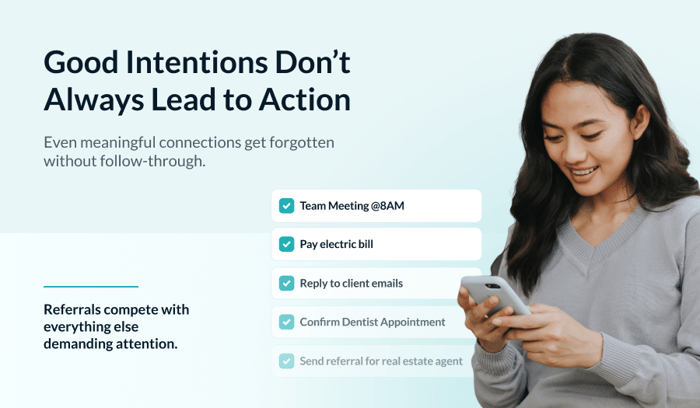
Why Good Intentions Aren’t Enough
Most referrals aren’t lost because people don’t care.
They’re lost because life gets busy.
Even when someone genuinely wants to help, distractions, competing priorities, and simple forgetfulness can prevent introductions from ever happening.
Let me give you an example.
A few years ago, my son was in a car accident with his younger brother in the car. They were about 20 minutes from home when they called and told us what had happened.
My husband and I rushed to meet them. When we arrived, the police were there, along with an ambulance and a tow truck. Our car was totaled.
Thankfully, no one was seriously hurt, but it was still a lot to process.
A day or two later, we met the tow truck driver at the lot where our vehicle had been taken. He was fantastic. He answered all of our questions, explained our options, and treated us with kindness and respect during a stressful situation.
After everything was settled, he said:
“My company is doing a challenge to see who can get the most referrals and testimonials. Would you mind helping me reach my goal?”
Honestly, I was absolutely planning to do it.
He had done a great job.
He handed me his business card, which I tucked into the stack of paperwork we had accumulated from the accident. His request was simple: leave a review online and tag him.
He did everything right. He asked. He made it easy. He gave me clear instructions.
The problem wasn’t him.
My mind was on a thousand other things.
My younger son still had a headache, even though the EMTs said he was fine. I was worried about whether symptoms would show up later. My older son suddenly didn’t have a vehicle to get to work. We were trying to figure out insurance, repairs, transportation, and how we were going to pay for everything.
The list seemed endless.
We also had several other errands to run while we were in town that day. By the time my husband and I got home, I had completely forgotten about the referral.
A few days later, I remembered.
I wanted to help him.
I intended to help him.
But I couldn’t remember his name, and somewhere along the way his business card had disappeared.
That experience taught me something important: most referrals aren’t lost because people don’t want to help. They’re lost because life gets busy, details get forgotten, and good intentions never turn into action.
The tow truck driver did everything right.
He earned the referral.
The opportunity was there.
But my good intentions weren’t enough.
That’s exactly the problem Referral Sprints are designed to solve.
What Is a Referral Sprint?
A Referral Sprint is a short, focused session where two people intentionally spend time generating introductions and referrals for each other.
Instead of waiting for opportunities to happen naturally over time, both people actively:
- Identify valuable connections
- Discuss ideal referral opportunities
- Make introductions
Most Referral Sprints only take about 15–20 minutes.
But because the session is focused and intentional, it can lead to meaningful conversations, partnerships, clients, interviews, or future opportunities very quickly.
Why Referral Sprints Work
Most people genuinely want to help the people they know.
The problem is:
- They get busy
- They forget
- They’re unsure how to explain what you do
- They don’t know who would actually be a good fit
Referral Sprints remove that ambiguity.
Instead of hoping someone remembers you later, you create a dedicated moment to:
- Clarify who you want to meet
- Discuss where opportunities may exist
- Make introductions while both people are actively engaged
It turns networking from passive into proactive.
Who Are Referral Sprints Good For?
Referral Sprints can work for almost anyone who grows through relationships, including:
- Business owners
- Entrepreneurs
- Referral partners
- Career centers
- Freelancers and consultants
You don’t need a huge audience or a massive network.
You just need relationships and a willingness to help each other.
.png?width=700&height=408&name=Referral%20Sprints%20Feature%20Image%20(1).png)
What Happens During a Referral Sprint?
Most Referral Sprints are simple.
1. Define the Right Connections
Both people briefly explain:
- Who they’re hoping to meet. This could be an ideal customer, referral partner, employer, recruiter, investor, or strategic connection.
- What kinds of opportunities they’re looking for
- What makes someone a strong referral
2. Look Through Existing Networks
This could include:
- Phone contacts
- LinkedIn connections
- Clients
- Colleagues
- Friends
- Business groups
- Community connections
The goal isn’t quantity.
It’s identifying meaningful, relevant introductions.
3. Make Introductions
Once good matches are identified, introductions can happen immediately through:
- Text
- Direct messages
Even a handful of quality introductions can create significant momentum.
Where PitchCards Fit In
Referral Sprints can absolutely work without PitchCards.
But PitchCards help remove one of the biggest barriers to referrals:
People often don’t know how to introduce you clearly.
Think back to the tow truck driver.
I wanted to help him.
He earned the referral.
But once I lost his business card and forgot his name, the opportunity disappeared.
A PitchCard gives people something much more memorable to share than a piece of paper. Instead of trying to remember details later, they can simply send your PitchCard and let your introduction do the work.
Instead of trying to explain who you are themselves, they can simply share your PitchCard.
That makes introductions: faster, easier, more accurate, and more comfortable for everyone involved
Because people don’t just receive your contact information — they quickly understand who you are, what you do, and how you communicate.
“People don’t refer business cards. They refer people.”
That’s what makes Referral Sprints especially powerful when paired with PitchCards.
The Bigger Opportunity
Most referrals don’t fail because people don’t care.
They fail because people get busy.
Referral Sprints create a dedicated moment for introductions to happen before good intentions are forgotten.
Whether you’re a business owner, job seeker, consultant, or referral partner, the principle is the same:
The easier you make it for people to help you, the more likely they are to do it.
And sometimes the fastest way to grow your network isn’t meeting more people.
It’s helping the people you already know make introductions with confidence.
Related Articles
How to Make Referrals Effortless and Grow Your Business
The Art of the Elevator Pitch: Why It Matters and How to Nail Yours