



Organizations bring together talented professionals, diverse expertise, and huge networks of potential referral partners.
But they also create a quiet challenge:
It’s easy to blend in. At conferences, chapter meetings, team calls, and networking events, hundreds—or sometimes thousands—of professionals are introducing themselves.
Most conversations sound something like this:
“Hi, I’m in real estate.”
“I work in insurance.”
“I help businesses with marketing.”
And within minutes, those introductions disappear. Not because the professionals aren’t talented. But because the introduction didn’t stick. In a large organization, the people who generate referrals, opportunities, and partnerships aren’t necessarily the most experienced. They’re the ones people remember and can confidently introduce to others.
Why Most Professional Introductions Fall Flat
Most professionals describe what they do using titles or categories. But titles rarely create clarity. Think about it. If someone says: “I’m a financial advisor.” What does that actually mean? Do they work with retirees? Business owners? Families planning for college?
Without context, the introduction doesn’t give others enough confidence to refer them.
People don’t refer job titles.
They refer people they understand.
When someone clearly understands who you help and why you’re different, referring you becomes easy.

The Clarity Test: Can Someone Introduce You After One Conversation?
Inside large organizations, referrals often happen when you’re not in the room. A colleague might be talking with a client, friend, or partner and say: “Actually, you should talk to someone I know.” But that only happens when three things are clear.
-
What you do
-
Not the industry — the actual outcome you help people achieve.
-
-
Who you help
-
The more specific, the easier it is to recognize opportunities.
-
-
Why you’re different
-
What makes your approach memorable or unique.
-
When those three things are clear, your introduction becomes repeatable. And repeatable introductions are what drive referrals.
The Professionals Who Get the Most Referrals Do One Thing Differently
They tell a story instead of listing services. Compare these two introductions.
Example 1
“I’m a commercial real estate agent.”
Example 2
“I help growing local businesses find their first commercial space so they can move out of their garage and into a place that actually fits their growth.”
Both may describe the same job but one creates a picture. When people can visualize the situation you help with, they’re far more likely to recognize referral opportunities.

A Simple Framework for Talking About What You Do
If you want your introduction to stand out inside a large organization, try structuring it like this:
1. Who you help
Start with the people or businesses you serve.
“I work with first-time homebuyers…”
2. The problem you solve
What challenge are they facing?
“…who feel overwhelmed by the buying process…”
3. The outcome you help create
What improves after working with you?
“…so they can confidently buy their first home without feeling lost or pressured.”
This structure creates something powerful: Clarity.
And clarity is what makes someone easy to refer.
Why This Matters Even More in Large Organizations
Large organizations thrive on relationships.
- Brokerages
- Associations
- Referral groups
- Enterprise teams
All of them are built around the idea that members can open doors for each other.
The impact of referrals isn't small, it's measurable.
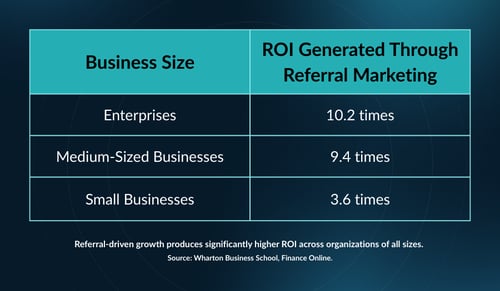 Research from Wharton Business School shows that referral-driven growth can generate significantly higher ROI than traditional marketing efforts, especially in larger organizations where networks are bigger and trust already exists.
But referrals don’t happen automatically. They happen when members can confidently say:
“I know someone who can help you.”
That confidence comes from understanding—not just recognizing a name. When professionals clearly communicate who they help and how they help them, the entire organization becomes more connected. And referrals begin to move naturally through the network.
Turning a Good Introduction Into a Memorable One
Once you have clarity, the next step is making your introduction easy to share. This is where many professionals struggle. They might explain themselves well in conversation, but after the meeting ends, the introduction disappears.
Traditional business cards share contact information—but they rarely capture personality, clarity, or confidence. That’s why more professionals are shifting toward short video introductions.
PitchCards, for example, allow professionals to share a quick 59-second story about who they help, what makes them different, and how someone can reach them.
Instead of exchanging a static card, people get a real introduction they can remember—and even share with others. That’s when networking starts to turn into referrals.
Because people don’t refer business cards.
They refer people they trust and remember.
The Real Goal of a Great Introduction
A great introduction isn’t meant to impress people. It’s meant to make you easy to introduce. When someone in your organization understands:
- Who you help
- The problem you solve
- Why you're different
They can confidently say: “You should talk to them.”
And in organizations built on relationships, that simple moment is where new opportunities begin.
Being remembered is only part of the equation. Here's how today's agents are tuning that into real opportunities.
Business Cards Reinvented: What Today's Agents Actually Need