



How career centers can better prepare students for the real job market
For decades, the traditional job search has followed a predictable path:
- Build a resume.
- Apply online.
- Repeat.
It’s structured. It’s trackable. It feels productive. But it’s not enough.
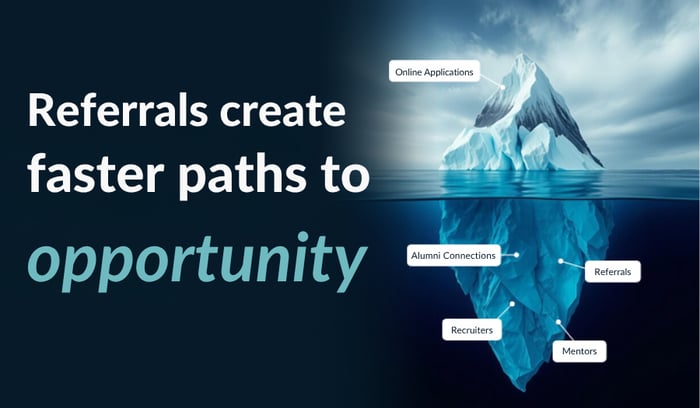
Many of the best job opportunities don’t come from job applications—they come from people.
The Problem with the Traditional Job Application Process
University career services teams work hard to prepare students for success:
- Resume and cover letter development
- Interview preparation
- Career fairs and employer events
- Access to job boards and internship listings
These are essential tools. But even with strong preparation, many students struggle to:
- Stand out to employers
- Get responses from applications
- Secure interviews in competitive markets
Why?
Because the online job application process is crowded, impersonal, and often disconnected from how hiring actually happens.
Most applications:
- Get lost in high-volume applicant pools
- Lack personality and differentiation
- Fail to build trust with hiring managers
And without trust, candidates get overlooked.
The Hidden Job Market: How Students Actually Get Hired
What many students—and even some career development programs—don’t fully account for is the hidden job market.
This refers to opportunities that are filled through:
- Referrals
- Internal recommendations
- Professional networks
- Informal introductions
According to LinkedIn, referrals remain one of the most effective sources of hire, often resulting in faster hiring timelines and stronger long-term retention.
That’s because hiring managers trust people who are recommended by someone they already trust.
In other words:
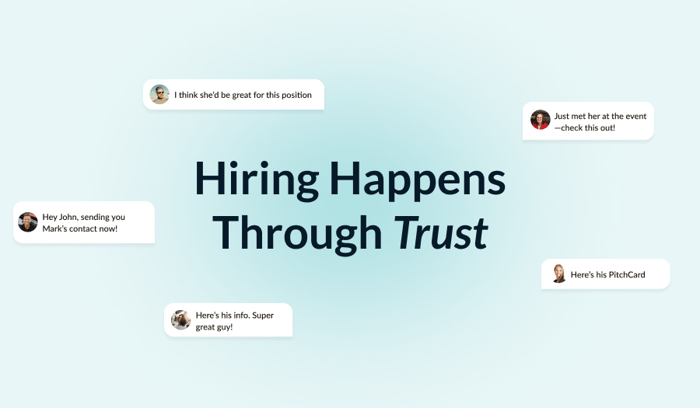
People hire people they feel confident being introduced to.
Why Referrals Matter More Than Applications
A job application answers the question:
“Is this person qualified?”
A referral answers the more important question:
“Can I trust this person?”
That difference is everything.
Referrals work because they create:
- Recognition – “I remember this person.”
- Clarity – “I understand what they do.”
- Confidence – “I feel good introducing them.”
Traditional resumes and LinkedIn profiles often struggle to deliver all three.
Why Students Struggle to Get Referrals
Most students aren’t lacking ability—they’re lacking visibility and memorability.
Think about common student networking moments:
- A brief conversation at a career fair
- A quick introduction through a professor
- A LinkedIn connection after an event
Without a strong follow-up or lasting impression, those interactions fade quickly.
Not because the student isn’t capable—but because:
- There’s no clear, memorable story
- No easy way for others to recall them
- No simple way to share them with others
And if someone can’t easily explain who you are…
They won’t refer you.
The Shift Career Centers Need to Embrace
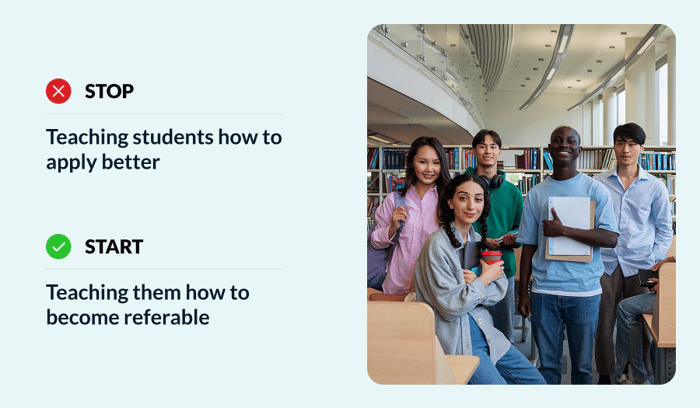
To improve student outcomes, career services teams may need to shift the focus from:
👉 “How do students apply more effectively?”
to
👉 “How do students become more referable?”
Because the most successful students aren’t just applying to opportunities.
They’re being introduced to them.
Introductions:
- Build trust instantly
- Create warmer conversations
- Open doors that job applications can’t
This transforms the job search from:
“I hope they choose me.”
into:
“You should meet this person.”
Helping Students Become More Referable
If referrals are the goal, then career centers need to help students:
- Communicate who they are clearly
- Make a strong first impression quickly
- Give others a reason to advocate for them
Because at the end of the day:
People don’t refer resumes. They refer people.
When students are easy to understand, easy to remember, and easy to share—they become significantly more valuable in a network.
What This Means for University Career Services
Career centers are uniquely positioned to bridge the gap between preparation and opportunity.
By focusing not just on applications—but on introductions and referrals—they can:
- Improve student job placement rates
- Strengthen employer relationships
- Activate alumni networks more effectively
- Better reflect how hiring actually works
This isn’t about replacing resumes.
It’s about enhancing how students show up beyond them.
🔜 Coming Next: From Resume to Referral
If the future of job placement is built on referrals and introductions, the next question becomes:
How do you actually help students become more referable?
In our next post, we’ll break down:
- How Career Centers Can Operationalize Referrals
- How students can present themselves more effectively
and how tools like PitchCards make it easier for others to confidently say:
“You should meet this person.”