



How university career centers can help students become more memorable, more confident, and more referable
For years, career preparation has centered around one primary goal:
Helping students create strong resumes and apply for jobs effectively.
And while resumes still matter, today’s hiring environment requires something more.
Many career opportunities are discovered through referrals, introductions, and trusted relationships—not just online applications.
That means universities have an opportunity to evolve beyond simply helping students apply for jobs.
They can help students become people others want to recommend.
Why Referrals Matter More Than Ever
In competitive hiring markets, employers are overwhelmed with applications.
A resume may communicate:
- Education
- Experience
- Technical qualifications
But referrals communicate something even more valuable:
tTRUST
When someone recommends a student to an employer, they’re not just sharing credentials. They’re sharing confidence.
That’s why referred candidates often:
- Move through hiring processes faster
- Receive more interview opportunities
- Stand out more quickly
- Feel more credible from the start
According to NACE’s Job Outlook 2024 survey, 95.5% of employers identified communication skills as one of the most important competencies for career readiness.
That creates a major opportunity for universities and career centers: helping students communicate who they are clearly, confidently, and memorably—not just on paper, but in real conversations and introductions.
The challenge is that most students are never taught how to become referable.

The Gap Between Networking and Opportunity
Most students understand networking is important.
But many still struggle with:
- Introducing themselves confidently
- Explaining what they want clearly
- Following up after meetings or events
- Staying memorable after the conversation ends
This creates a major disconnect.
Students may attend:
- Career fairs
- Networking events
- Alumni mixers
- Employer presentations
…but leave without creating lasting professional momentum.
Not because they lack potential.
Because they lack tools that help others remember and advocate for them.
Career Centers Have a Bigger Opportunity
University career services departments are uniquely positioned to bridge this gap.
Instead of focusing exclusively on:
- Resumes
- Applications
- Interview preparation
Career centers can also help students:
- Build professional confidence
- Communicate their story clearly
- Create stronger first impressions
- Become easier to introduce and recommend
This shift aligns more closely with how hiring actually works in the real world.
Because opportunities move through relationships.
From Static Profiles to Human Connection
Traditional resumes and LinkedIn profiles are important—but they’re limited.
They explain what a student has done.
They rarely communicate:
- Personality
- Energy
- Communication style
- Confidence
- Authenticity
And those human qualities often influence whether someone feels comfortable making an introduction.
That’s where modern, story-driven tools can create a meaningful advantage.
How PitchCards Help Students Become More Referable
People don’t refer resumes. They refer people.
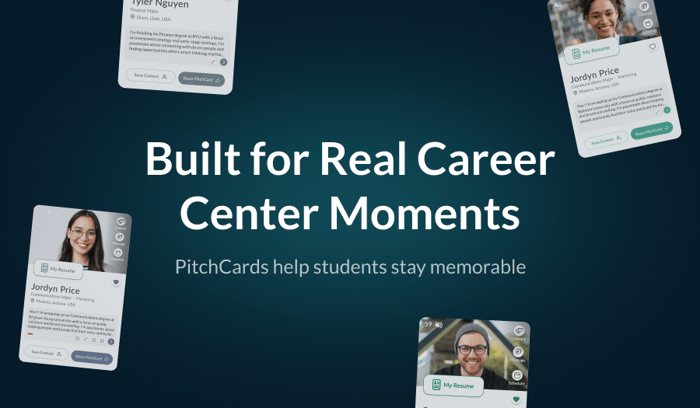
PitchCards help students introduce themselves through short, authentic video introductions that are:
- Easy to create
- Easy to share
- Easy for others to remember
Instead of relying only on static documents, students can quickly communicate:
- Who they are
- What they’re passionate about
- What opportunities they’re seeking
- Why they’d be a strong fit
This makes networking more human—and referrals more natural.
Real University Use Cases for PitchCards
Career centers can use PitchCards in a variety of ways to improve student engagement and career outcomes.
Career Fairs
Students can share a PitchCard before or after an event to help recruiters remember them beyond a brief conversation.
Alumni Networking
Alumni can more confidently refer students after seeing a quick personal introduction instead of just reading a resume.
Internship Placement
Students applying for internships can stand out immediately by putting a face and voice behind their application.
Employer Partnerships
University employer partners gain a more personal and engaging way to evaluate candidates early in the process.
Student Confidence Building
PitchCards encourage students to practice communicating their story clearly and professionally—an essential career skill.
Helping Introverted Students Participate More Confidently
Not every student feels comfortable networking in traditional ways.
For introverted students especially, networking events can feel overwhelming or transactional.
Tools like PitchCards can reduce that pressure by helping students:
- Prepare their introduction ahead of time
- Communicate more confidently
- Make a strong impression without feeling “salesy”
- Continue conversations after the initial interaction
This creates more inclusive opportunities for student engagement and connection.
The Future of Career Services Is Relationship-Driven
The universities that stand out in the future may not simply be the ones with the biggest job boards.
They’ll be the ones that help students:
- Build stronger professional relationships
- Develop confidence and communication skills
- Become memorable in competitive hiring markets
- Generate more referrals and introductions
Because career success is no longer just about submitting applications.
It’s about creating trust at scale.
Final Thought
Students already have resumes.
What many still need is a better way to:
- Stand out
- Be remembered
- Get introduced to the right opportunities
That’s the power of relationship-driven career development.
And it’s why the future of student success may depend less on how many applications students submit…
…and more on how many people are willing to say:
“You should meet this person.”
🔗 Related Reading
- Why the Best Job Opportunities Come Through People—Not Applications
- Networking for Introverts: How to Let Your PitchCard Do the Talking